Career Lessons From the BUA Driver Reinstatement
In April 2026, BUA Cement reinstated 400 sacked truck drivers with 3 months back pay. Learn how to protect your bonuses, job, and rights in Nigeria.

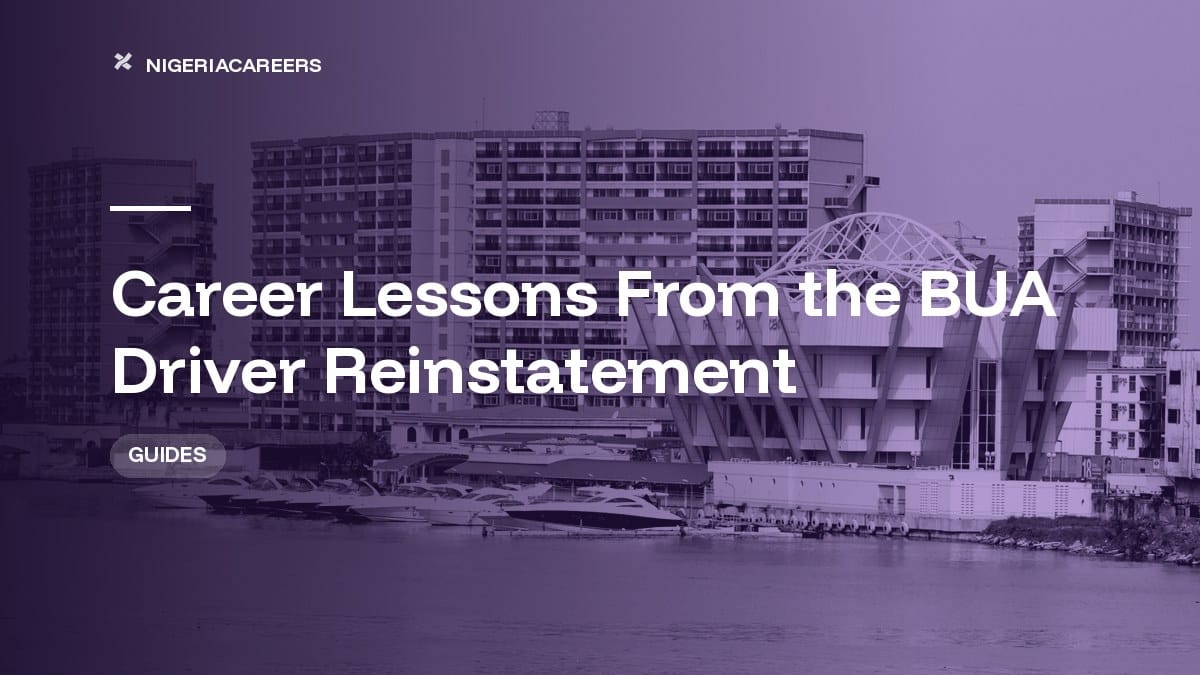
In April 2026, BUA Cement reinstated over 400 sacked truck drivers at its Okpella plant in Edo State and approved three months of full salary arrears covering January to March 2026. That reversal ended a four-month standoff triggered by a dispute over how the company distributed a ₦30 billion staff reward pool.
For any Nigerian employee, from factory operators to corporate managers in Victoria Island, the Okpella crisis is a real-world masterclass in workplace leverage, compensation fine print, and how disputes actually get resolved when your job is on the line.
What Actually Happened at BUA Cement Okpella
To understand the career lessons, you need the exact timeline and numbers. On December 14, 2025, BUA Group held its Night of Excellence and Long Service Awards at Eko Hotels in Lagos. Chairman Abdul Samad Rabiu announced a ₦30 billion cash gift divided among 510 long-serving employees across the conglomerate, with five standout workers receiving ₦1 billion each.
Ten days later, on December 24, 2025, hundreds of truck drivers at the Obu-Okpella cement plant in Edo State staged a demonstration. Many had driven for the company for over a decade and believed they had been unfairly cut out of the ₦30 billion disbursement by middle management. The protest halted transport operations.
Management responded swiftly. They shut down the plant's transport division and issued dismissal letters without severance pay to the protesting drivers. Initial reports counted up to 700 affected drivers across various employment tiers.
For three months, the drivers were out of work. The breakthrough did not come from a strike picket or a courtroom. It came in early April 2026, when the traditional ruler of the host community, the Okuokpellagbe of Okpella, HRM Michael Sado, led a delegation directly to Abdul Samad Rabiu. Rabiu agreed to recall 400 drivers and pay their January, February, and March 2026 salaries in full.
Discretionary Bonuses vs Contractual Pay
The spark that cost hundreds of drivers their income for a quarter was a misunderstanding of how corporate rewards work. In Nigerian employment law, there is a hard wall between contractual entitlements and discretionary largesse.
When a company founder announces a ₦30 billion reward pool for 510 staff members out of a workforce of thousands, that money is a discretionary gift unless your employment contract explicitly ties it to your role. At BUA's December 2025 event, the awards were structured for specific long-service tiers and executive-selected excellence, spanning employees who had served between five and forty years.
Before you join a workplace agitation over unpaid bonuses, check three documents:
- Your Offer Letter: Look for guaranteed 13th-month pay, fixed performance percentages, or profit-sharing clauses. If a bonus is written as "at the sole discretion of management," you cannot legally force payment.
- Your Staff Status: During the BUA dispute, several drivers noted they were non-contract or third-party staff. In Nigerian manufacturing and oil and gas, outsourced personnel employed through labour contractors are legally excluded from parent-company equity or long-service pools unless specifically named.
- The Employee Handbook: Check the exact eligibility criteria for long-service awards. Many Nigerian conglomerates require unbroken full-time staff status (not daily-rated or trip-rated tenure) to qualify for milestone payouts.
Never risk a permanent salary by protesting for a discretionary payout you have no legal claim to enforce.
Why WildCat Protests Cost You Your Severance
The Okpella drivers thought a December 24 demonstration would force management to the table. Instead, it handed HR the exact legal ammunition needed for summary dismissal without payoff.
Under Nigerian labour law and the Trade Disputes Act, walking off the job or blocking company logistics without following statutory trade union dispute procedures is an unprotected industrial action. When you disrupt operations outside a formal union structure, management stops viewing the issue as a welfare complaint and treats it as gross misconduct or economic sabotage.
Notice the difference in numbers: roughly 700 drivers initially protested and lost their jobs in December 2025, while the April 2026 mediated settlement covered 400 reinstated drivers. In almost every mass workplace protest, a significant percentage of participants never get recalled.
If you and your colleagues have a legitimate grievance over pay or benefits, protect yourself with these steps:
- Put it on paper first: Send a polite, collective memo signed by departmental representatives or your recognised trade union (such as NUPENG, PENGASSAN, or the relevant transport union) requesting clarification from HR.
- Keep working while escalating: Refusing to work or grounding company assets gives your employer grounds for summary dismissal, which strips you of your notice pay and terminal benefits.
- Document your own conduct: If a spontaneous protest breaks out at your branch or factory, stay away from physical blockades and keep written proof (emails, gate logs, messages to your supervisor) showing you did not participate in destroying or halting company property.
Third-Party Mediation Beats Courtroom Fights for Mass Reinstatement
If those 400 BUA drivers had filed a lawsuit in January 2026 instead of seeking community mediation, they would still be unemployed today.
Under Nigerian law, courts almost never force a private employer to take back a sacked worker. The legal principle is simple: a court will not force a willing servant on an unwilling master. The only standard exception is "employment with statutory flavour," which applies to civil servants and staff of public agencies created by statute, such as the CBN, NNPC, or federal universities.
For private-sector workers, the National Industrial Court of Nigeria (NICN) awards money, not your old desk back. Look at recent NICN rulings to see how the timeline and remedies actually play out:
- Monetary damages, not reinstatement: In November 2026, when the NICN ruled against Mikano International for firing an employee kept six months past probation without formal confirmation, the court did not send him back to Mikano. Justice Isaac Essien awarded ₦8 million (₦2 million notice balance, ₦5 million general damages, and ₦1 million costs).
- Years of waiting: In October 2025, the NICN ruled in Chalibeda B. Gonzuk v. Agric Services Training Centre that an employer cannot turn its internal disciplinary panel into a criminal tribunal for vehicle theft. That case was filed in 2023 and took two years to conclude. Another landmark ₦10 million exemplary damages award in February 2025 against Abubakar Tafawa Balewa University Teaching Hospital took eight years from its 2017 filing date.
By routing their appeal through the Okuokpellagbe of Okpella directly to BUA Group's chairman, the drivers bypassed a multi-year legal battle and achieved in three months what a court could never give private employees: full reinstatement plus 100% back pay for the months they sat at home.
When you face a deadlocked dispute with a Nigerian employer, identify the stakeholders the company actually listens to. For a manufacturing plant, host community leaders and state labour commissioners hold massive leverage because operational peace depends on them. For a corporate professional, an respected industry board member, a former executive mentor, or the Ministry of Labour's conciliation desk will get your severance or recall sorted faster than a noisy social media war.
How to Audit Your Employment Paperwork Today
Do not wait until a dispute breaks out to discover your true standing in your company. Pull out your employment file this week and verify four things:
- Your Confirmation Letter: Have you passed your three-month or six-month probation without receiving a confirmation letter? While the NICN recognises "implied confirmation" if an employer keeps paying you past probation, fighting for it in court takes years. Ask HR for your written confirmation letter now.
- Who Signs Your Payslip: Check the exact registered company name on your bank alert and payslip. If you wear a BUA, Dangote, MTN, or Chevron uniform, but your salary comes from "XYZ Logistics & Manpower Ltd," your legal employer is XYZ Ltd. Your rights to severance, pensions, and group bonuses are governed by XYZ's contract, not the big brand on your ID card.
- Disciplinary Hearing Clauses: Read your staff handbook's disciplinary section. Under NICN precedent, if your contract states you must face a disciplinary committee before termination, and management fires you without one, that procedural breach makes the termination wrongful.
- Your Pension and PAYE Remittances: Log into your Pension Fund Administrator (PFA) app and verify that your monthly 10% employer and 8% employee contributions are actually hitting your Retirement Savings Account (RSA). Unremitted pensions are the first sign that an employer treats your category of staff as disposable.
Frequently Asked Questions
Can a private company in Nigeria be forced by a court to reinstate me after sacking me?
Almost never. Nigerian courts generally only order reinstatement for government workers whose jobs are protected by statute (employment with statutory flavour). If a private company fires you wrongfully, the National Industrial Court will order them to pay your notice period, unpaid salaries, and financial damages, rather than forcing them to rehire you. Reinstatement in the private sector happens through internal appeals, union negotiation, or respected third-party mediation, just like the BUA Cement settlement.
Am I legally entitled to a share of a company bonus announced by the CEO?
Only if the bonus is written into your employment contract or collective bargaining agreement with clear, automatic qualification rules. General end-of-year gifts, founder largesse, and merit pools (such as BUA Group's ₦30 billion award for 510 selected staff) are legally classified as discretionary. Management has the legal right to decide the eligibility criteria and exclude staff categories who do not meet them.
What should I do within the first 48 hours if I am unfairly dismissed in Nigeria?
First, do not sign a termination acceptance form that waives your right to future claims in exchange for your basic final salary. Second, download and back up all personal copies of your employment contract, confirmation letter, appraisal records, and payslips before your work email is deactivated. Third, write a calm, formal appeal letter to HR or executive management requesting a review of the decision, or consult an employment lawyer to calculate your rightful notice pay and damages before escalating.