Relocating for Work in Nigeria: Lagos vs Abuja vs Other Hubs
Moving for a job in Nigeria? Compare 2026 salaries, rent, Band A power costs, and industries across Lagos, Abuja, Port Harcourt, and Ibadan.

A 2026 compensation survey by Legit.ng and Profolio Nigeria shows that tech and data roles in Lagos pay 20% to 35% more than identical jobs in Abuja or Port Harcourt. Yet many professionals who move to Lagos for a ₦150,000 monthly pay bump end up poorer by the third month.
Relocating for work in Nigeria is a margin calculation, not a salary contest. What matters is what remains after your landlord, your estate generator, and your daily commute take their share.
Where the Jobs and Money Actually Are
Each major Nigerian city runs on a distinct economic engine. Moving to the wrong city for your industry caps your career ceiling before you even unpack.
Lagos: Private Sector, Finance, and Tech
Lagos holds the headquarters of Nigeria's Tier-1 banks (Access Bank, Zenith Bank, GTCO, UBA, FirstBank), major fintechs like Moniepoint, Paystack, and Flutterwave, and telecommunications giants MTN and Airtel. According to a 2026 MyJobMag report, the average formal monthly salary in Lagos sits around ₦351,000, with mid-level tech, finance, and marketing roles ranging from ₦350,000 to over ₦700,000 monthly.
If you want fast career progression and job-hopping leverage, Lagos has no rival. If your employer shuts down on a Friday, ten competitors in Victoria Island or Ikeja are hiring by Monday.
Abuja: Policy, Development, and Public Sector Consulting
Abuja runs on government parastatals, regulatory agencies, diplomatic missions, and international development organisations. It is the primary base for the Central Bank of Nigeria (CBN), the Nigerian National Petroleum Company Limited (NNPC), the Federal Inland Revenue Service (FIRS), and bodies like the ECOWAS Commission, the World Bank, and United Nations agencies.
Private-sector corporate jobs are fewer here, so job-hopping is slower. However, NGO and multilateral roles frequently benchmark pay against foreign currencies or top-tier federal scales, offering high stability and strong health and housing allowances.
Port Harcourt: Energy, Marine, and Engineering
Port Harcourt remains the operational heart of Nigeria's oil, gas, and marine logistics sectors. Major employers include Renaissance Africa Energy Company (which acquired Shell's onshore SPDC assets), NLNG (operating between Port Harcourt and Bonny Island), TotalEnergies, Indorama Eleme Petrochemicals, and oilfield service giants like SLB.
Technical engineers, HSE officers, and supply chain specialists earn top-bracket naira and dollar-indexed packages here. Outside energy, banking, and hospitality, however, the formal corporate market shrinks rapidly.
Ibadan and Secondary Hubs: Remote Work and Agribusiness
Formal local salaries outside Lagos, Abuja, and Port Harcourt average between ₦120,000 and ₦200,000 per month in 2026, according to Guardian Nigeria estimates. That makes local employment tough. Yet cities like Ibadan, Enugu, and Abeokuta have become strategic bases for remote workers earning Lagos or foreign salaries, alongside researchers at institutions like the International Institute of Tropical Agriculture (IITA) in Ibadan.
The Real Cost of Living Breakdown (2026 Figures)
Never evaluate a job offer on gross monthly pay. Annualise your fixed city costs first.
Rent and the Upfront Cash Trap
Housing will eat your relocation savings if you do not plan for peripheral fees. In 2026, an entry-level one-bedroom apartment (mini-flat) in a central Lagos mainland neighbourhood or inner Abuja suburb costs between ₦900,000 and ₦1.5 million annually. Standard two-bedroom flats in working-class Lagos hubs like Surulere or Yaba now command ₦2.5 million to ₦3.5 million per year, while two-bedroom flats in Lekki Phase 1 or Ikate start between ₦6 million and ₦10 million.
In Abuja, central districts like Wuse, Maitama, and Asokoro price out most salaried workers, pushing middle-class professionals to Lugbe, Kubwa, Lokogoma, or Gwarinpa. In Port Harcourt, comparable one-bedroom flats outside Old and New GRA average ₦700,000 to ₦1.2 million annually.
The real shock is the transaction bill. Although the Lagos State Real Estate Regulatory Authority (LASRERA) caps agent commissions at 10% of annual rent, agents across Lagos and Abuja routinely demand 10% agency, 10% legal (agreement), and a 10% caution deposit. On a ₦2 million flat, you need ₦2.6 million in cash before you collect the keys. In serviced estates on Lagos Island or in Abuja, annual service charges add another ₦500,000 to ₦1.5 million.
Power and Utilities
When inspecting an apartment, ask for the electricity feeder band before looking at the kitchen. Under the Nigerian Electricity Regulatory Commission (NERC) Service-Based Tariff regime, Band A feeders receive a minimum of 20 hours of daily power and cost ₦209.50 per kWh in 2026. Band B feeders (16 hours minimum) cost roughly ₦63 per kWh.
Band A sounds expensive on a prepaid meter, costing a typical single professional ₦40,000 to ₦70,000 monthly if running an air conditioner. Yet it is far cheaper than the alternative. Generating your own power with petrol averaging roughly ₦965 per litre or diesel at over ₦600 per kWh in fuel costs alone will easily burn ₦120,000+ a month.
Commuting and Daily Life
Lagos taxes your time; Abuja taxes your transport budget if you live far out.
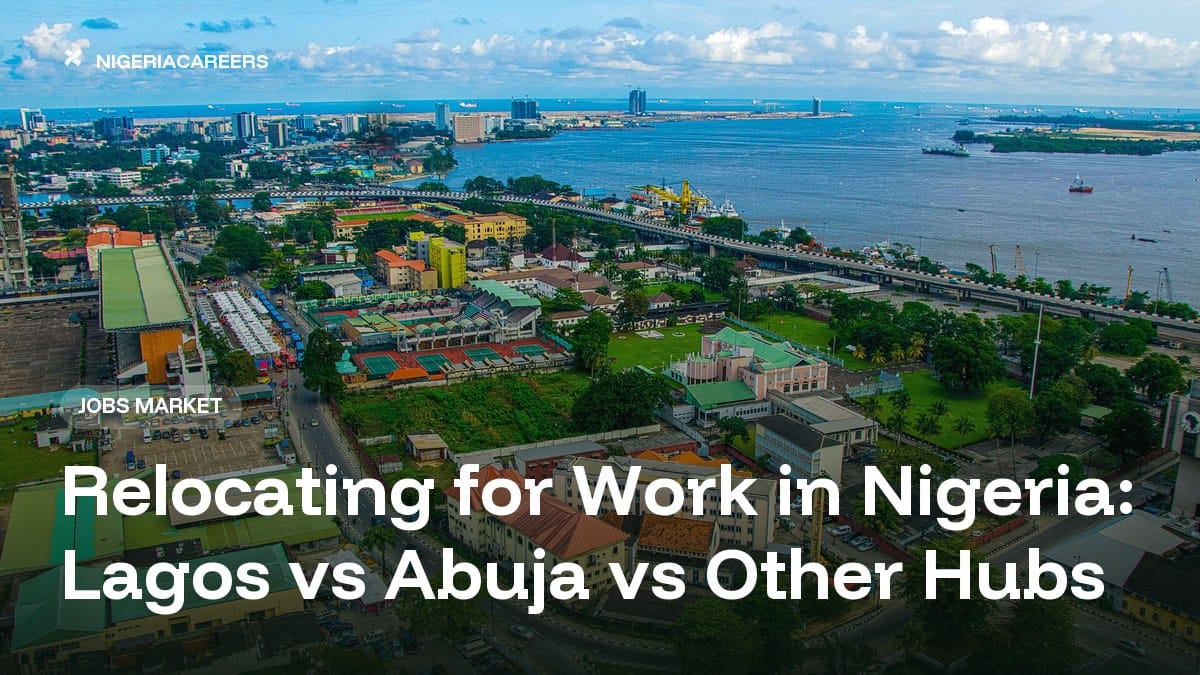
In Lagos, picking an apartment based on low rent rather than proximity to your office is a classic rookie mistake. Crossing the Third Mainland Bridge or navigating the Lekki-Epe Expressway at 7:00 am can cost you four hours daily. Fortunately, rail infrastructure now offers relief on specific corridors. Using a LAMATA Cowry card, a full trip on the Lagos Blue Line (Marina to Mile 2) costs ₦750 (with a 25% off-peak discount between 10:00 am and 4:00 pm), while the Red Line (Agbado to Oyingbo) costs ₦1,000 per full trip in 2026.
Abuja has wide, paved expressways and minimal traffic inside the city centre. Your commute from Gwarinpa or Lugbe into the Central Business District takes 25 to 45 minutes outside peak military checkpoint bottlenecks. Because public bus transit is weak, you will rely on shared taxis (along routes) or ride-hailing apps like Bolt and Uber, where single intra-city rides run from ₦1,500 to ₦4,000.
If you work hybrid or fully remote, Ibadan offers a clever hack. You can rent a modern two-bedroom flat in Bodija, Akobo, or Jericho for a fraction of Lagos prices, enjoy quiet roads, and take the NRC standard-gauge train from Moniya (Obafemi Awolowo Station) to Mobolaji Johnson Station in Ebute Metta, Lagos, in roughly two hours whenever your boss calls an in-person meeting.
Actionable Steps Before You Accept a Relocation Offer
Do not sign an offer letter requiring relocation until you run these four steps:
- Apply the 1.4x Rule to Lagos Offers: If you are moving from a lower-cost city like Ibadan, Enugu, or Ilorin to Lagos, a 20% raise is a pay cut. Demand at least a 40% net increase, or negotiate a formal relocation lump sum to absorb the upfront rent and agency fees.
- Negotiate Temporary Accommodation: Never house-hunt in Lagos or Abuja via WhatsApp. Fraudulent agents regularly collect inspection fees for occupied flats. Ask HR for two to four weeks in a company guest house or budget hotel upon arrival so you can inspect streets in person.
- Audit the Commute at 7:30 AM: Before paying for an apartment, take the exact trip from that street to your new office on a Tuesday morning at 7:30 am. Check the mobile data reception inside the flat and verify the feeder band on a neighbour's recent electricity vending receipt.
- Protect Your Caution Fee in Writing: Refuse to pay agency or legal fees before seeing a draft tenancy agreement. Ensure the agreement explicitly labels the caution fee as refundable and states the exact number of days after move-out for repayment.
Frequently Asked Questions
How much salary do I need to live comfortably in Lagos or Abuja in 2026?
For a single professional living alone in a decent one-bedroom flat without sharing, you need a net monthly income of at least ₦450,000 to ₦600,000 in Lagos or Abuja. That covers annualized rent Savings (roughly ₦100,000 to ₦150,000 monthly), food, Band A electricity, daily commuting, and modest savings. If you earn under ₦300,000 monthly, flat-sharing is the smartest financial move.
Can a Lagos landlord legally charge two years' rent in advance?
Under the Lagos State Tenancy Law 2011, it is unlawful for a landlord to demand or receive more than one year's rent from a new sitting tenant (and six months for monthly tenants). In Abuja and Port Harcourt, however, one-year advance rent is standard market practice, and landlords hold broad leverage.
Is Port Harcourt cheaper than Lagos and Abuja?
Yes, particularly on housing and commute times. According to 2025/2026 cost-of-living tracking, rent for standard apartments in Port Harcourt sits roughly 20% to 30% below comparable districts in Lagos and Abuja, though security-vetted estates in Old and New GRA command premium rates similar to Victoria Island.
Ready to make your move? Compare verified roles across Lagos, Abuja, Port Harcourt, and remote teams today on NigeriaCareers.